


Silver Needle vs White Peony: Which White Tea to Pick
Silver Needle vs White Peony: how the two classic white teas differ in leaf, flavor, body, caffeine and price, how to brew each one, and…
Country, language & currency
or
The Tea Journal · Brewing Guides · White Tea
By the Tealyra Tea Team · · 5 min read

In short: Shou Mei (寿眉, "longevity eyebrow") is the fullest-bodied of the classic Fujian white teas. It is made from mature leaves picked after the buds and young leaves have gone to Silver Needle and White Peony, so it brews darker, fruitier and rounder, a bit like a light black tea. Fresh Shou Mei tastes of hay, ripe fruit and honey; aged Shou Mei turns toward dried dates, wood and a syrupy sweetness. Brew it at 185 to 195°F (85 to 90°C) with 4 to 5 g per 8 oz (240 ml) for 3 to 4 minutes, and re-steep the same leaves two or three times.
If you find Silver Needle too quiet and White Peony too delicate, Shou Mei is the white tea that finally tastes like a full cup. This guide covers what it is, how fresh and aged versions differ, and how to brew it well.
All true white tea comes from the same two steps: fresh leaves are withered, then dried, with no rolling and no pan-firing. What separates the grades is the plucking. Silver Needle is buds only. White Peony (Bai Mu Dan) is a bud with one or two young leaves. Shou Mei is the later pick: the third and fourth leaves, often with a stem and only a few silvery tips. Gong Mei sits between White Peony and Shou Mei and is rarely sold under its own name outside China.
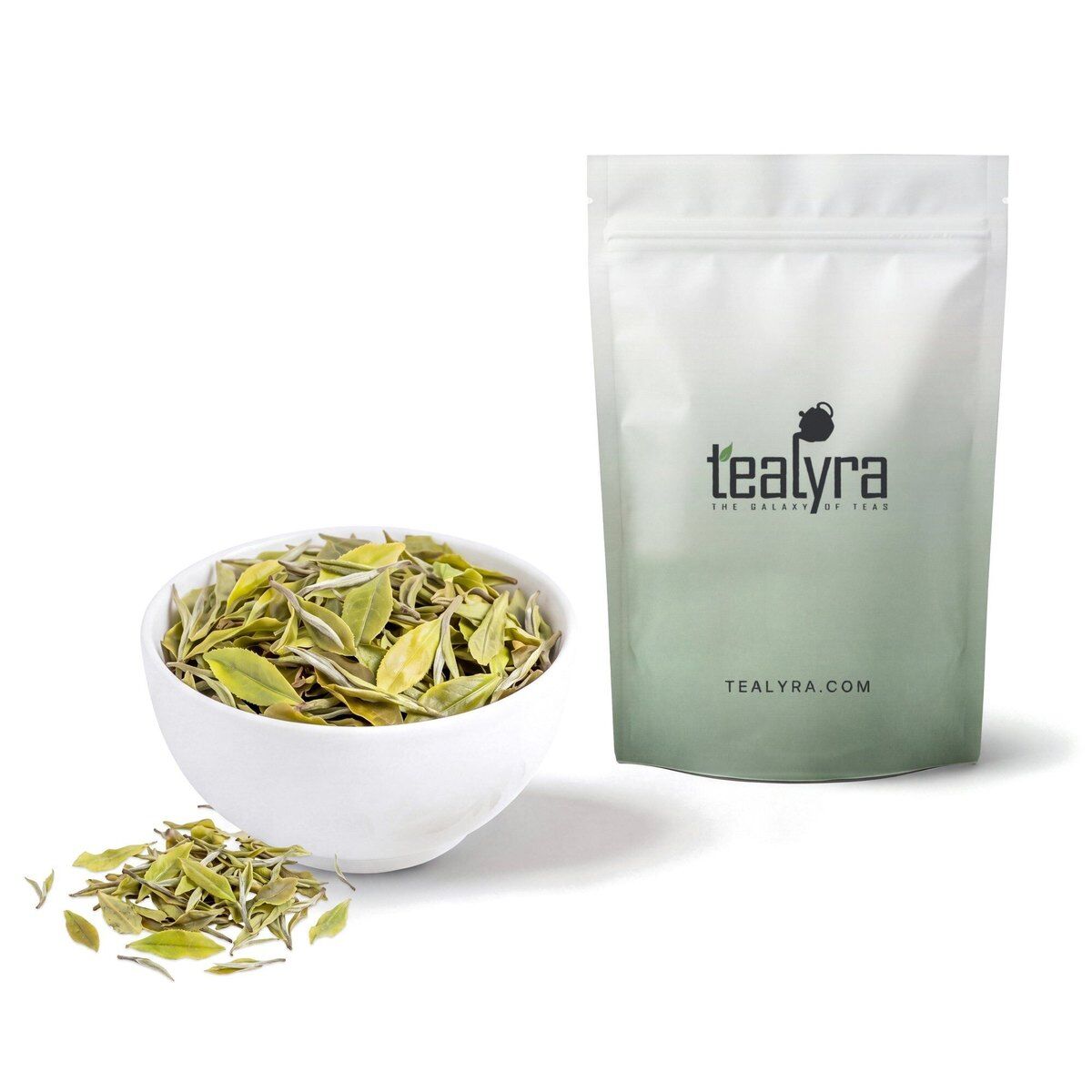
Because the leaves are more mature, Shou Mei carries more of the compounds that give color and body. The dry leaf looks rustic, a mix of green, olive and brown leaves with some stems. A good one still shows whole leaves and a few tips. Our Spring Shou Mei from Fuding is picked early in the season, which keeps the leaves light green and intact rather than dark and broken. Browse the whole range on our white tea page.
Expect a cup that is noticeably bolder than other white teas:
This is why Shou Mei is often recommended to black tea drinkers who want to try white tea. It also forgives a minute too long or water a few degrees too hot.
Shou Mei is the white tea most often set aside to age. In Fujian it is said that white tea only gets better with the years, and for Shou Mei the change is real. Kept dry, dark and away from strong smells, the leaf slowly darkens and its taste shifts from fresh hay toward dried fruit and wood.
| Trait | Fresh Shou Mei (0-2 years) | Aged Shou Mei (5+ years) |
|---|---|---|
| Dry leaf | Green, olive and light brown, some silver tips | Dark brown to reddish, often pressed into cakes or rolled into balls |
| Liquor | Bright orange | Deep amber to reddish brown |
| Aroma | Hay, apricot, honey, flowers | Dried Chinese dates, jujube, aged wood, hint of medicinal herbs |
| Taste | Round, fruity, light-black-tea depth | Thick, syrupy, sweet, sometimes with a faint smokiness |
| Best brewed | Western style or gongfu, 185-195°F | Gongfu with near-boiling water, or simmered in a kettle |
Our 2016 Shou Mei Aged White is a good example of the aged style: upper leaves and tips hand-rolled into small balls that unfurl slowly over several steeps, with a warm amber cup, date and honey notes, and a smoothness closer to a light oolong than to a fresh white tea.
Shou Mei is a generous tea. Use slightly more leaf than you would for a black tea by volume, because the leaves are large and light.
Put 8 to 10 g of Shou Mei in a 1-quart (1 liter) pitcher of cold water and refrigerate for 8 to 12 hours. The result is a juicy, apricot-like iced tea with almost no bitterness, which makes Shou Mei one of the best white teas for cold brewing.
Think of the three classic grades as a slider from delicate to bold. Bai Hao Yin Zhen Silver Needle is soft, sweet and melon-like, best brewed cooler and sipped slowly. Pai Mu Tan White Peony adds body, a touch of hay and floral notes, and is the easiest all-rounder. Shou Mei is the boldest and most affordable, the one to reach for when you want a full cup, when you want to cold brew, or when you want a tea that will age. For a closer look at the first two, read our guide to Silver Needle vs White Peony.
Yes. Like all white tea, it comes from the Camellia sinensis plant and contains caffeine. A cup brewed as above has roughly 15 to 30 mg, less than most black teas and about a third of a cup of coffee, though leaf amount, water temperature and steep time all change the number.
Silver Needle is only buds, picked by hand over a few spring days, so a pound of it takes far more work. Shou Mei uses the larger leaves picked later in the season. Lower price does not mean lower quality; it means a different, bolder style of tea.
You can, especially with an aged or strongly brewed Shou Mei, where the body stands up to a splash of milk. Fresh Shou Mei is usually better plain so the fruit and honey notes stay clear.
Stored properly it keeps for years and is one of the few teas that can improve with time. Fresh loose Shou Mei is at its brightest within two years; aged versions are typically enjoyed from five years onward.
Silver Needle vs White Peony: how the two classic white teas differ in leaf, flavor, body, caffeine and price, how to brew each one, and…

Explore our complete guide to white tea. Discover popular styles like Silver Needle, understand delicate flavors, and master brewing the…